It requires a magnificent feat of political manipulation in order to manoeuvre the modern totalitarian dictatorship of communist China into a position as the most viable long-term trading partner for the European Union. Yet this is exactly what the very stable genius currently occupying the White House has managed in less than 100 days in office.
One is reminded of the legendary quip by former premier Zhou Enlai in 1972 about how it was “too early to tell” about the significance of the French Revolution. Like many legendary tales, it is only half true. Premier Enlai was later revealed to be referring to the student uprising in Paris four years prior. Yet the longevity of the story and people’s willingness to believe it tell us something about the Western view of China as a master of the long game.
For the last decade, however, China has been struggling. The world’s second biggest economy is battling slowing growth and a demographic situation that often is described as a collapse. And while the numbers do look bad, the collapse is perhaps more distant than the wording might suggest. Yet Beijing’s troubles are no minor tremor either.
The demographic rot, decades in the making, is setting in with the slow inevitability of a glacial shift. Recent projections by the United Nations suggest that China’s population could fall below 800 million by the end of the century, a collapse unprecedented in modern history. Worse still, alternative projections suggest that it could fall as low as 488 million. For reference, we are talking about a worse decline than Europe under the Black Plague. But while the Black Plague left a young and healthy population able to kickstart the Renaissance, China’s population is already ageing rapidly. By 2035, 30% of the population is expected to be over the age of 60.
To counteract this inevitable development, a monumental shift towards automatic (AI and robotic) manufacturing is taking place. Long-time New York Times foreign policy commentator Thomas L. Friedman recently commented on this development, stating that “I Just Saw the Future. It Was Not in America”.
This necessary shift has been further complicated by the chilling of relations with large parts of the Western economies. Chief among the reasons, perhaps, is China’s own doing: as its economy ascended to global superpower status, Beijing grew markedly more unapologetic and aggressive towards its trading partners. The Covid-19 pandemic then placed enormous strain on global shipping networks, prompting many companies to reconsider their export patterns and relocate manufacturing closer to their primary markets. This trend has unfolded alongside the rise of India and other Asian nations — such as Malaysia, Vietnam and Indonesia — as key players in a burgeoning manufacturing hub.
This is not to say that China is without friends. Beijing’s influence in South America and Africa is still monumental, yet China was expecting to navigate increasingly rough seas in the years to come, pointing towards a slow ignominious end for the People’s Republic as a superpower. Then along came Donald and put Beijing back in the long game position.
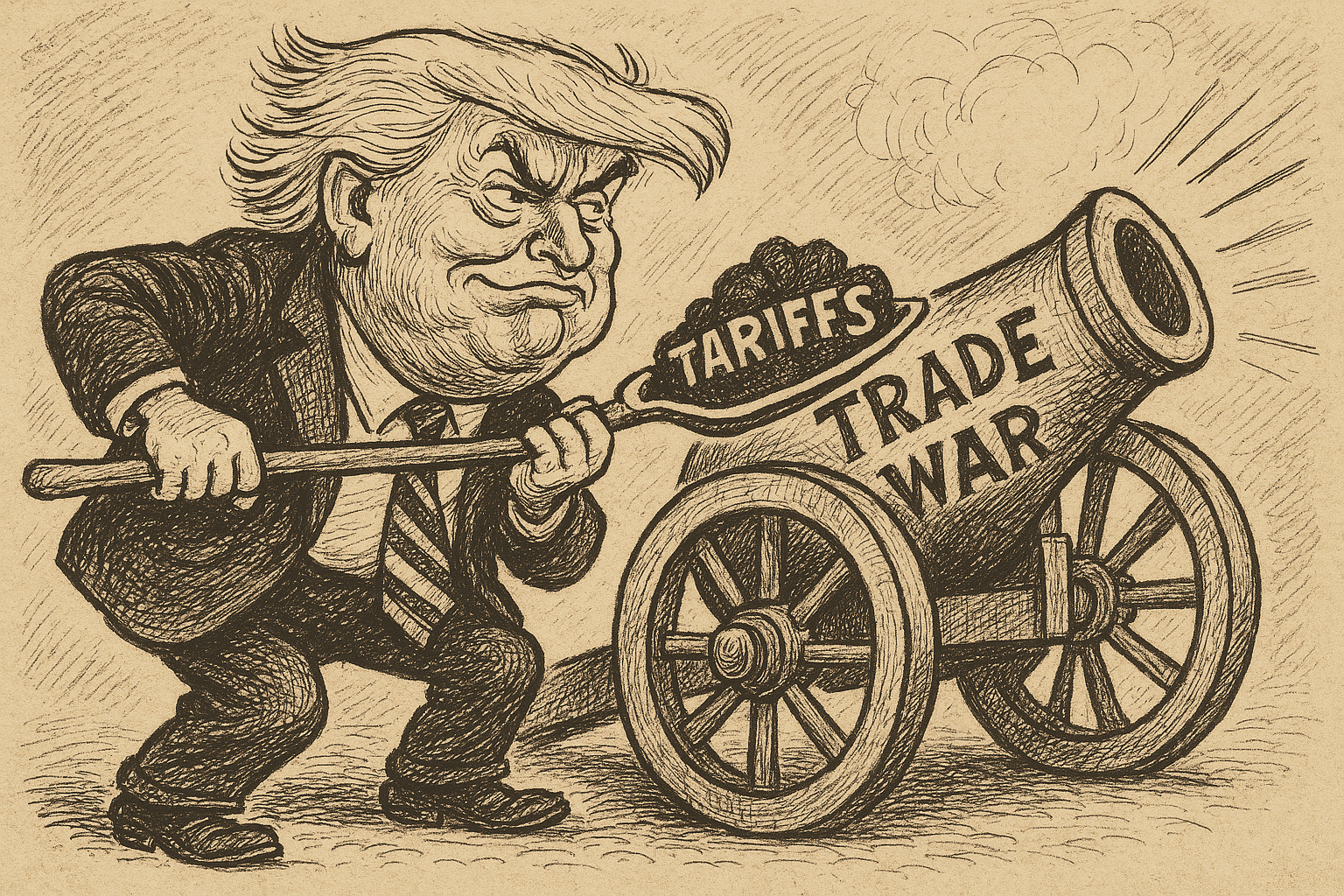
When the American administration imposed tariffs on almost the entire world and launched a trade war that rattled the global economy, China responded with a mixture of countermeasures and diplomatic initiatives. Premier Li Qiang emphasised the importance of self-sufficiency and increased domestic consumption in response to external pressure. At the same time, China raised its military budget by 7.2 per cent and set an economic growth target of 5 per cent, signalling a clear determination to strengthen both its economic and military capacities.
In Europe, where Trump’s policies have bred uncertainty and distrust, China saw an opportunity to fill the emerging vacuum. President Xi Jinping’s special envoy, Lu Shaye — known for his forthright manner — launched a charm offensive aimed at winning over European leaders. Lu openly criticised American aggressiveness towards its allies and highlighted China’s commitment to peace and cooperation. This strategy sought to position China as a reliable partner at a time when Europe’s relationship with the United States was under considerable strain.
China’s Foreign Minister, Wang Yi, played a central role in these diplomatic manoeuvres. Exploiting the cracks in transatlantic relations, Wang sought to strengthen China’s ties with European nations. He underlined the importance of multilateralism and stressed China’s willingness to collaborate with Europe in maintaining international stability and free trade. This message stood in stark contrast to American protectionist rhetoric and resonated with European leaders seeking new alliances in uncertain times.
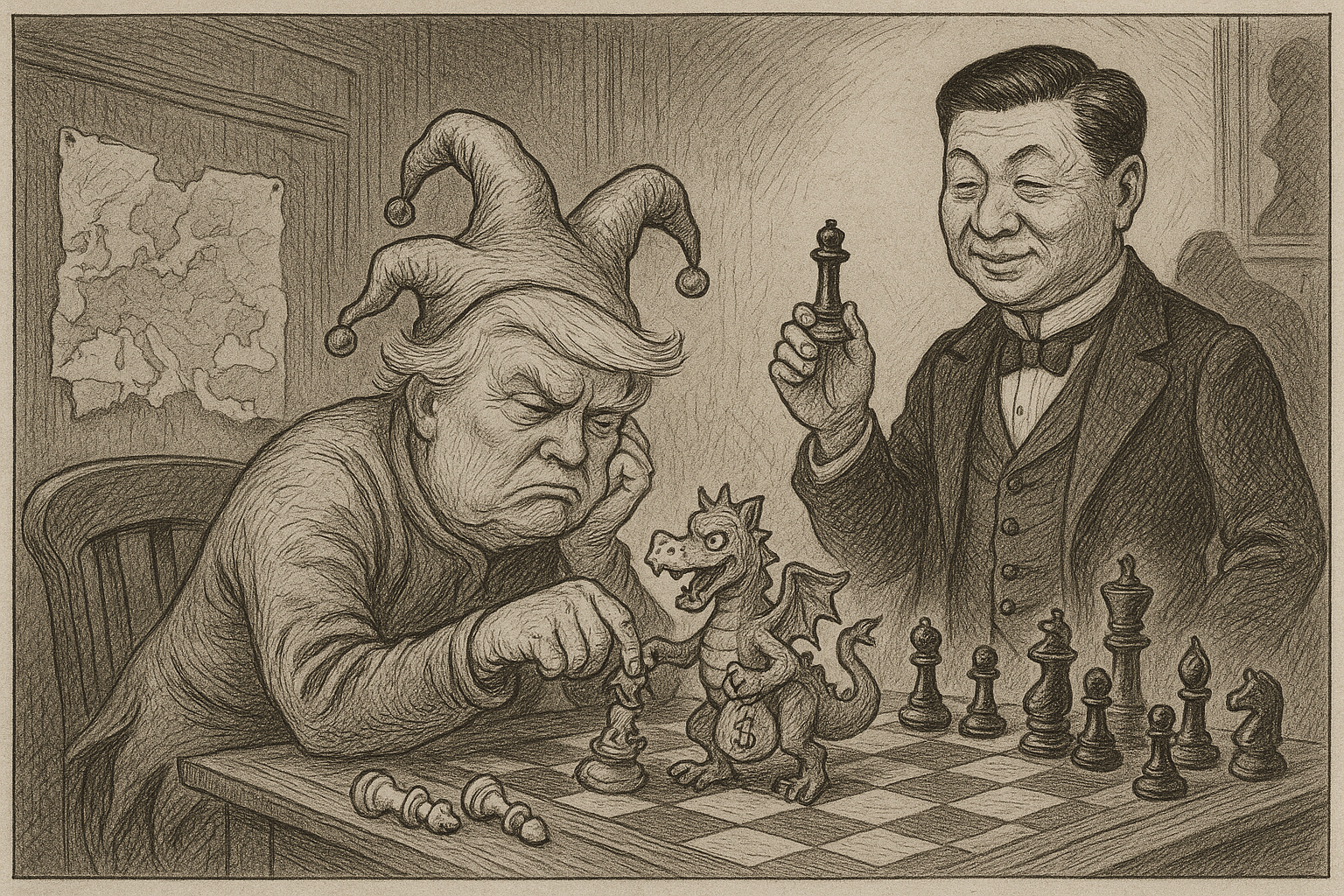
While Washington deepened the rift between itself and its traditional allies, Beijing has worked methodically to occupy the space left behind. By presenting itself as a stable and predictable partner and by emphasising its commitment to international agreements and cooperation, China positioned itself as the great beneficiary of the geopolitical chess game unfolding before us.
It is ironic that, while Washington strove to reassert its dominance by tearing up old alliances and questioning international institutions, it simultaneously paved the way for China to strengthen its global influence. This development ought to attract far greater attention than it thus far has. History has shown that power vacuums rarely remain unfilled for long, and in this case, China has proved more than willing to step in and occupy the space others have vacated. With a little help from the White House.