Photo by Marek Studzinski
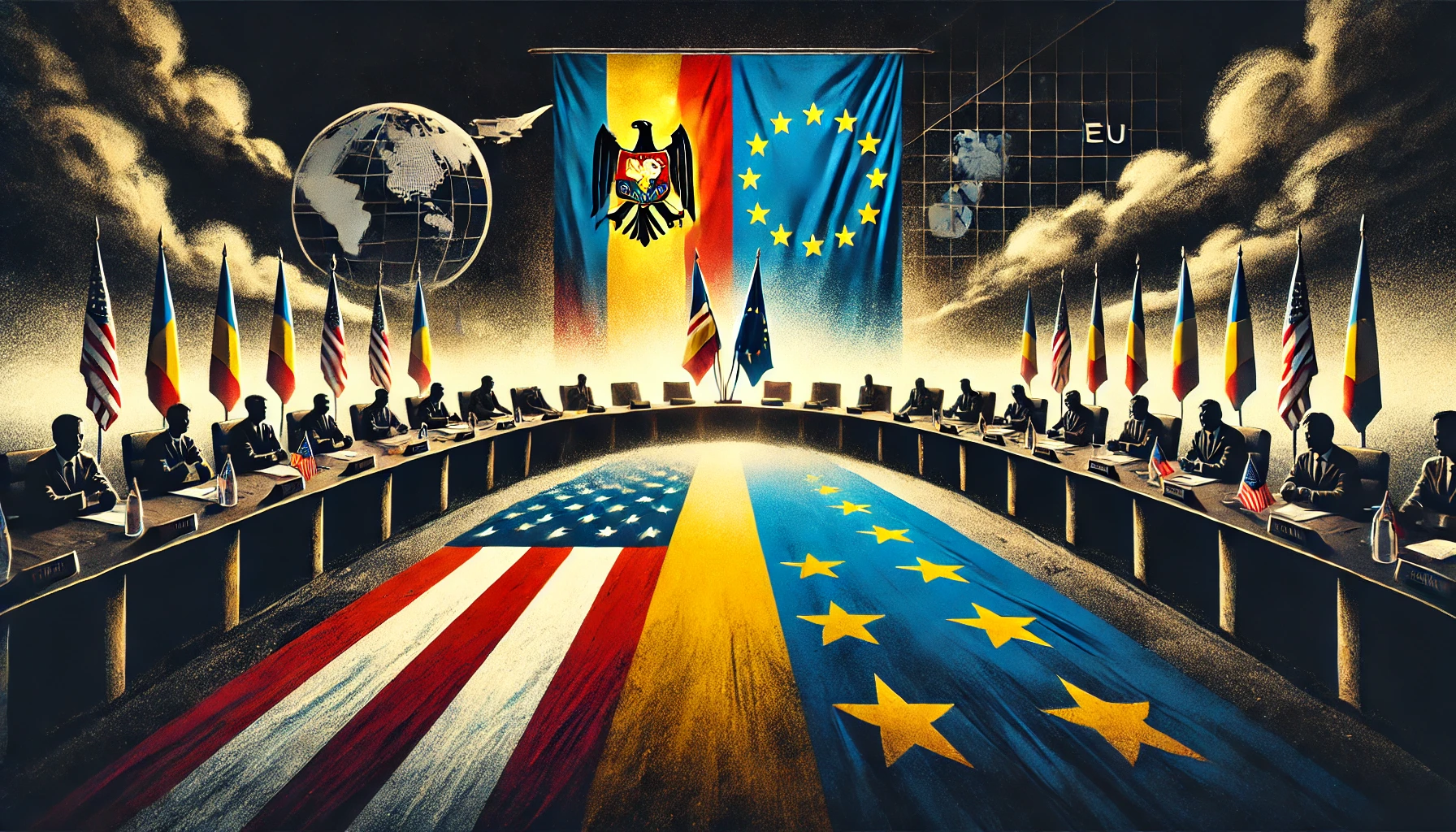
With the coming of Donald Trump as the 47th president of the United States, a new era of uncertainty dawns on the North Atlantic Treaty Organisation (NATO). Few institutions have embodied the post-war Western order as completely as NATO. Founded on the principle of collective defence, it has stood as a barricade against aggression and a testament to transatlantic solidarity. Today, however, questions linger about its future. Donald Trump’s open disdain for the alliance, calling it “obsolete” and talking about withdrawal and even threatening to ignore Article 5 in the face of Russian aggression against members who do not live up to the financial goals set in 2006 under President Bush, sent tremors through European capitals and forced a reckoning: what would NATO be without its most powerful member?
The departure of the United States from NATO, whether as a deliberate retreat or a symptom of inward-looking American politics, would undoubtedly be a profound shift. Losing the world’s largest military power and chief financial backer would not be without consequence. Yet this scenario, dire as it may seem at first glance, could also be an opportunity for NATO to evolve into something more self-sufficient and distinctly European. While the transition would be fraught with challenges, the long-term benefits of a more autonomous NATO should not be overlooked.
Europe is far from defenceless. The continent is home to some of the world’s most capable militaries. France, with its nuclear arsenal and global reach, has a deeply ingrained strategic culture. The United Kingdom, despite its political turbulence, remains a formidable military power with a robust nuclear deterrent and significant expeditionary capacity. Italy, often underestimated, contributes a well-trained and versatile armed force. The latest NATO members, Sweden and Finland, bring advanced military technology, intelligence capabilities, and a strategic position in the Baltic region. Together, the remaining alliance represents a powerful bloc that could form the backbone of a Europe-centred NATO.
In the short term, an American withdrawal would necessitate significant adjustments. European nations would need to increase defence spending and deepen their cooperation, ironically fulfilling Trump’s wish. The instinct to look inward, focusing on national priorities or squabbling over burden-sharing, would need to be resisted. Yet, these initial hurdles could pave the way for a more cohesive and independent alliance, one no longer tethered to the priorities of Washington but fully capable of shaping its own strategic direction.
A Europe-led NATO would still uphold the alliance’s core mission: the defence of democracy and the deterrence of authoritarian aggression. Freed from the constraints of U.S. geopolitics, it could approach global challenges with a perspective better aligned to Europe’s interests. Whether confronting Russian expansionism, responding to instability in the Middle East, or navigating the rise of China, a NATO steered by Europe would be better positioned to act decisively and coherently.
Such a transformation could also have a stabilising effect on the European Union. In an era of political fragmentation, NATO’s collective security framework could serve as a unifying force, reminding member states of the importance of collaboration in the face of common threats.
Europe has been the beneficiary of American security guarantees since the Marshall Plan, and this might be the time to once again take full ownership of its defence. A NATO led by Europe would demonstrate that the continent is not merely a cultural and economic powerhouse but also a serious geopolitical actor, capable of securing its place in a rapidly changing world.
The future of NATO will ultimately depend on the resolve of European leaders. While Trump’s presidency may have accelerated the discussion, the question of Europe’s strategic autonomy is larger than any single American president. If Europe seizes this moment, it could transform NATO into a more versatile alliance, better equipped to face the challenges of the 21st century. And perhaps, in the end, the United States would come to see this evolution not as a loss but as the fulfilment of NATO’s original purpose: a partnership of equals, united in the defence of shared values.