Illustration: Canva
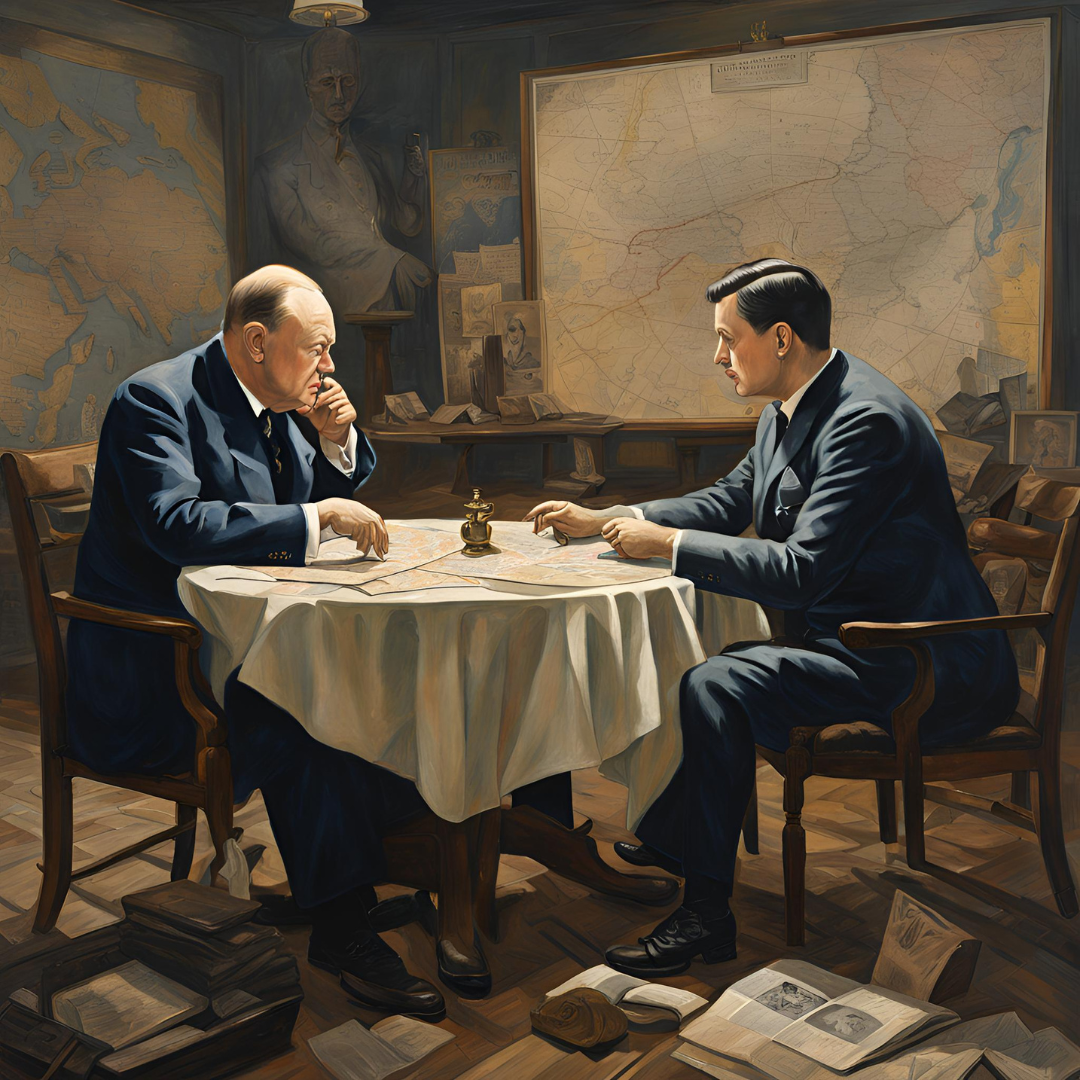
It is a grim consolation that humanity so often finds its finest self in the face of catastrophe. It is precisely in the shadow of destruction that certain individuals distil the essence of leadership. Winston Churchill and Volodymyr Zelensky—two men separated by time, culture, and geography—stand as unflinching embodiments of a nation’s will to resist. They share a common weapon: the power of words and an unyielding faith in the resilience of their people.
Churchill’s famous words, delivered in the bleak days of 1940, are not merely a declaration of defiance but a poetic act of fortification. “We shall fight on the beaches, we shall fight on the landing grounds, we shall fight in the fields and in the streets, we shall fight in the hills; we shall never surrender.” These words are more than a pledge to the British people; they are a challenge to the enemy: Bring your terror, but know that our resolve is a wall you will never breach. These words are dynamite; they are less a rhetorical flourish than a stark, nuclear-powered refusal to capitulate.
Volodymyr Zelensky, on the other hand, faced his moment of destiny with similar clarity when, on the eve of Russia’s full-scale invasion, he stood before a camera, surrounded by his aides, and declared, “We’re all here. Our military is here. Citizens in society are here. We’re all here defending our independence, our country, and it will stay this way.” The simplicity of his statement is its strength. It is both a reassurance and a rallying cry. No one—least of all Zelensky himself—could have predicted that this unassuming man, whose career had been in comedy and popular culture, would become the emblem of his nation’s indomitable spirit.
The parallels between these men are striking, not least in their ability to wield language as a form of resistance. Both understood that words, at their most potent, are actions in themselves. Churchill crafted his speeches with a pen dipped in steel; Zelensky, armed with a smartphone and an earthy tone, embodied his country’s defiance in real time. Their words became both shield and sword, directed as much at their own people as at a watching world.
But the contrasts are just as revealing. Churchill’s Britain had its venerable history, traditions, and empire to lean on. His speeches were suffused with a backward glance to a glory that was already fading. Zelensky, by contrast, represents a people whose history is a scarred palimpsest of conquest and loss, a nation still striving to define its modern identity. For him, the fight is not only about defence but about defining what Ukraine is and what it can become.
Ultimately, their greatness lies not in personal charisma or background but in their roles as mirrors. They reflect the best of their respective peoples: determination, pride, and a willingness to stand firm when all seems lost. It is a kind of leadership the world rarely sees but one we can only hope it will never forget.